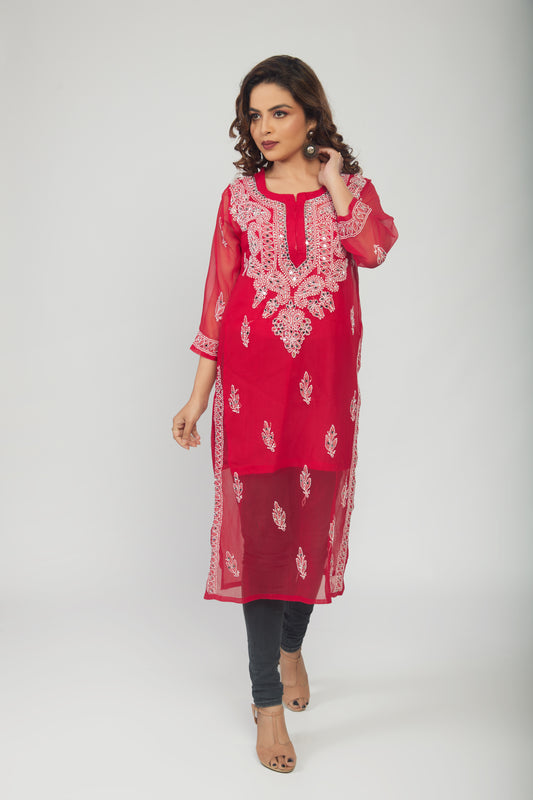
Chikankari Kurti for Women
The Lucknowi Kurta That Never Quite Goes Out of Style
Some clothes you wear once and forget. A chikankari kurti isn’t one of them. It sits in your wardrobe for years, gets pulled out for everything from a regular weekday to an evening wedding, and somehow always looks right. That’s the strange thing about chikankari — it doesn’t really age.
The craft itself is older than most things in our wardrobes. Chikankari embroidery comes from Lucknow, where artisans have been doing this work for centuries — fine white thread on muslin, originally, hand-stitched motifs of flowers, vines, leaves, paisleys. The Mughals brought it in, the city kept it alive, and somehow it survived everything that fashion threw at it.
At Prisachi, the chikankari kurti for women collection sits in that long lineage — handcrafted pieces that feel rooted in the craft but cut for how women actually wear ethnic wear today.
What Makes Chikankari Different From Other Embroidery
If you’ve ever wondered why chikankari looks softer than other embroidery, it’s because of how it’s done. The motifs are stitched using thread on the surface, but the stitch types — backstitch, chain stitch, herringbone, the famous shadow work where the thread sits behind the fabric and shows through — give the embroidery a quiet, layered feel. Nothing sticks out aggressively. Nothing screams.
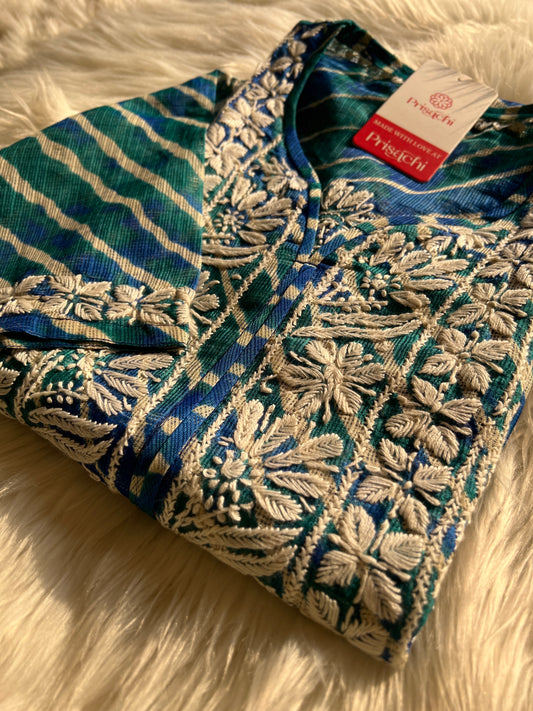
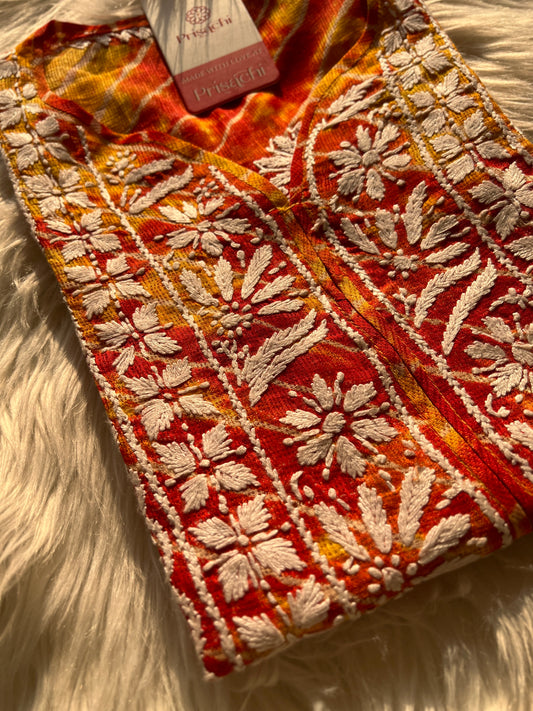
Traditional chikankari was always white thread on white fabric, and honestly, the all-white piece is still the most striking version. But over the last decade or so, the craft has expanded. Pastels, jewel tones, even darker grounds — black and navy chikankari has become its own thing — and the embroidery shows up beautifully on all of them.
Today’s chikankari kurta set isn’t bound to summer whites. It’s a year-round wardrobe piece.
Fabrics That Carry Chikankari Well
Not every fabric works with chikankari. The embroidery is delicate, and it needs a fabric that lets the stitchwork breathe rather than fighting it.
Cotton is the obvious favourite — soft, breathable, comfortable enough for full-day wear. Mulmul is even lighter, a fine cotton weave that feels almost weightless on the skin and works beautifully in summer. Modal cotton has a slight stretch and softness that makes it good for everyday pieces.
Georgette and chiffon are for when you want a bit more drape — they sit lighter, move more, and look beautiful for daytime functions. Chanderi is the upgrade pick — soft sheen, slight crispness, and the embroidery sits richer on it than on plain cotton.
For year-round wear and the most comfort, cotton or mulmul. For festive and dressier looks, Chanderi or georgette. For full luxury, silk chikankari — though it’s a bigger commitment in both price and care.
Picking the Right Chikankari Kurti for Your Body and Occasion
A chikankari kurta set works on most body types because the embroidery is restrained — it doesn’t add visual bulk the way heavier embroidery does. But fit still matters.
If you’re petite, straight or short chikankari kurtas tend to flatter best — they don’t overwhelm a smaller frame. For taller or longer torsos, A-line and Anarkali chikankari sets sit beautifully, with the flare giving good proportion.
Sleeve length is worth thinking about too — full sleeves with subtle cuffs feel classic and slightly formal, three-quarter sleeves are the most versatile, and short or cap sleeves work well for summer and casual wear.
For office and daily wear, a straight kurta for women cut in chikankari with cigarette pants and small jhumkas is hard to beat. Festive home wear — a Chanderi chikankari kurta set with a coordinating dupatta does the job.
For weddings and sangeets, an Anarkali kurta set in white or pastel chikankari, paired with chandbalis and a maang tikka, looks understated and expensive at the same time. White chikankari at weddings has its own quiet power — Bollywood figured this out years ago.
Why Choose Prisachi for Chikankari Kurta Sets
There’s a lot of “chikankari” floating around online, and not all of it is real chikankari. Some of it is machine embroidery passing off as handwork. Some uses fabric so stiff the embroidery can’t even sit properly. The handwork itself can be rushed, with motifs that are uneven or sparse.
Prisachi’s chikankari range tries to do this right. The pieces are hand-embroidered by Lucknowi artisans, the fabrics — cotton, mulmul, Chanderi, georgette — are chosen for how they hold the embroidery and how they feel against the skin, and the cuts stay relaxed and natural.
The colour palette stays grounded too: classic whites and ivories, soft pastels (mint, dusty pink, lavender, sage), and a few deeper tones (navy, black, wine) for those who want chikankari in something more dramatic.
If you’re drawn to the broader embroidered kurta set category and want to see what other handwork looks like alongside chikankari, that collection is worth a look too.
Caring for Chikankari Without Damaging the Embroidery
Chikankari needs more love than regular cotton kurtas. The thread is fine, the stitchwork is delicate, and rough handling shows up fast.
First wash should always be cold water, mild detergent, separately from other clothes. Hand wash only — machine washing, even on a gentle cycle, is rougher than the embroidery can handle. Don’t wring or twist. Squeeze water out gently, lay flat or hang on a wide hanger, and dry in shade.
Sunlight fades both the fabric and the embroidery thread, so this isn’t optional — it’s the difference between a kurta lasting two years versus ten.
Iron inside out on low heat, never directly over the embroidery. Use a thin cotton cloth between the iron and the fabric for extra protection. Store folded with tissue between layers if possible, or rolled — hangers can pull at the embroidery over time.
If your chikankari piece is silk or has heavier embellishment, dry clean only.
It sounds like a lot. It isn’t, really. Once you’ve done it twice, it becomes routine — and the kurta lasts long enough to make the effort worth it.
FAQs on Chikankari Kurta Sets for Women
What is the difference between chikankari and other embroidery?
Chikankari is a hand-embroidery technique from Lucknow, traditionally white thread on white fabric. What makes it different is the softness — the stitch types like shadow work and chain stitch sit lighter on the fabric than heavier embroideries like zari or zardozi. It looks quiet and layered rather than loud or raised.
Are chikankari kurta sets only for summer?
Not anymore. Traditional chikankari was on cotton and mulmul, mostly for warm weather. But today, you’ll find chikankari on Chanderi, georgette, and silk too, which makes it suitable for all seasons. White and pastel chikankari works beautifully in summer, while darker grounds in Chanderi or silk feel right for winter and evening events.
Can I wear chikankari to a wedding?
Yes, very much so. Anarkali chikankari sets in white, ivory, or pastel shades are a classic wedding choice — especially for daytime ceremonies, sangeets, and family functions. Pair with chandbalis or jhumkas, a maang tikka if you want to dress it up, and you’re set.
How do I wash a chikankari kurta?
Hand wash only, in cold water with mild detergent. Don’t machine wash, don’t wring, and don’t dry in direct sunlight. Iron inside out on low heat. For silk chikankari or pieces with heavier embellishment, dry clean only.
 Sold out