Saree for Women
Six Yards That Outlasted Everything
A saree is six yards of unstitched cloth. That’s it. No darts, no zippers, no shape until you put it on. And somehow it’s been worn for two thousand years across every region in India, by women of every age, profession, and economic class.
The reason works in your favour as a wearer. A saree adapts to your body. It doesn’t ask you to adapt to it. Same six yards, completely different look on different women — and equally right on all of them.
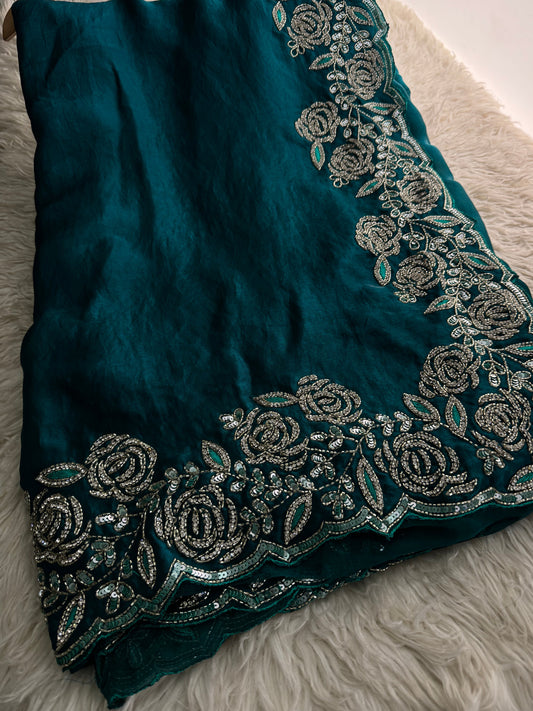
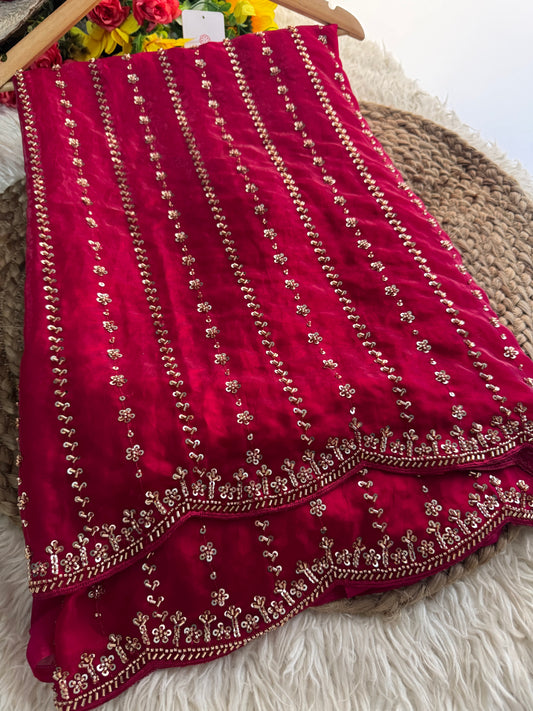
Prisachi’s saree collection covers what an Indian woman’s wardrobe actually needs. Cottons for daily wear. Soft silks for office. Regional handlooms for weddings. Designer pieces for the evenings that matter.
The Regional Silks Worth Knowing
Silk sarees get sold as one category online. They aren’t. Each region in India developed its own silk craft over centuries, and the differences matter when you’re spending money.
Four are worth knowing in detail. Banarasi silk from Varanasi is the North Indian wedding standard — heavy gold zari work, Mughal-inspired motifs, the saree most Bollywood brides wear. Kanchipuram is the South Indian counterpart — pure mulberry silk, thick zari borders, contrasting pallu, heavier drape than Banarasi. Chanderi from Madhya Pradesh is the lighter, dressier choice with subtle sheen and small zari motifs, made for daytime weddings and office wear. Mysore silk is the minimalist pick — light, soft, easier to drape, often the first silk saree women buy.
Beyond these, there’s Paithani (Maharashtrian, peacock motifs), Patola (Gujarati double-ikat, takes months per saree), Baluchari (Bengali, mythological scenes woven into the pallu), and Kasavu (Kerala’s off-white cotton-with-gold-border worn at Onam). Each ties to a region. Each carries cultural weight beyond just being beautiful.
If you’re buying your first silk, Mysore or Chanderi. Lighter, easier to drape, harder to mess up.
When Silk Isn’t the Answer
Most of the saree wardrobe isn’t silk. Cotton handles daily wear. Georgette handles parties. The fabric depends on the day.
Cotton sarees — Bengal cotton, mulmul, khadi — are the everyday workhorses. Breathable, comfortable for long hours, good for office, daytime functions, and casual wear. Most cotton sarees photograph crisper than their price tag suggests.
Georgette is the festive everyday. Lightweight, drapes beautifully, manageable for women who find silk intimidating. The wedding-guest favourite for evening receptions.
Chiffon is lighter still. Almost sheer. Wear with a proper slip for evening parties and cocktail nights.
Crepe, organza, net, linen, tussar, velvet — each has its place. Crepe for travel. Organza for daytime weddings (trending hard right now). Net for evening receptions. Linen for summer office. Tussar for daytime. Velvet for winter weddings.
The rough rule — cotton or linen for daily, crepe or soft silk for office, Chanderi or georgette for festive, regional silk for weddings.
Picking the Right Saree for the Day
Office sarees stay muted. Soft silk, Chanderi, or crepe in pastels, navy, deep maroon, beige. Subtle borders. Minimal embroidery. Pair with a structured blouse, small earrings, hair pulled back. The look reads polished without trying.
Daily wear belongs to cotton. Light prints, comfortable blouse, Kolhapuris. Some women wear cotton sarees to work every day and look better than colleagues in formal Western wear.
For weddings as a guest, the saree depends on the function. Georgette or organza for daytime ceremonies. Embroidered silk or designer georgette for evening receptions. Jewel tones for evening, pastels for daytime, avoid pure red and ivory if the bride is wearing them.
For sangeet and cocktail nights, organza, net, or sequin sarees in bold colours. Wine, emerald, cobalt, deep purple. Add statement jewellery and a clutch.
For weddings as a bride, the regional silk that matches your family tradition. Banarasi or Kanchipuram by default, Paithani or Patola if your tradition calls for it.
For Diwali, Karva Chauth, family pujas — Chanderi or cotton silk in jewel tones with traditional motifs. Comfortable enough to actually wear through the day.
For specific regional festivals — Onam, Durga Puja, Navratri — the traditional saree for that festival isn’t optional. Kasavu for Onam, white with red border for Durga Puja, bandhani for Navratri. Generic doesn’t work here.
Draping — Nivi and Everything Else
Over 100 regional drape styles exist. Nivi is the one most women actually use.
Nivi drape — pleats at the front tucked into the petticoat, pallu over the left shoulder. Works with every saree fabric, every occasion, every body type. If you’re new to sarees, start here. YouTube has hundreds of tutorials. Twenty minutes of practice gets you comfortable.
Bengali drape has no front pleats and the pallu comes from behind, often draped over both shoulders. Worn for Durga Puja and Bengali weddings. Gujarati Sidha Pallu drapes the pallu in front to show off the work, used at Gujarati weddings and Navratri. Maharashtrian Nauvari is the nine-yard dhoti-style drape that gives freedom of movement. Madisar is the complex Tamil Brahmin bridal drape that needs help to wear.
For most occasions, learning Nivi well is enough. The regional drapes belong to the specific cultural functions they were built for.
The Blouse Does Half the Work
This part gets ignored online. It shouldn’t.
A well-cut blouse changes the entire saree. High neck reads elegant. Boat-neck flatters most body types. Sweetheart and V-neck work for festive and party wear. Backless or low-back for evenings.
Three-quarter sleeves are the most versatile. Cap sleeves for casual, full sleeves with cuffs for formal, sleeveless for parties.
Padded blouses solve the visible bra strap problem and read cleaner under sheer saree fabrics. Worth the extra cost.
The petticoat matters too. A loose one shows through. A wrongly-coloured one ruins the drape. Match the petticoat to the saree base, not the border. Petticoat sitting at the natural waist makes the saree fall right.
First Saree — What to Buy, What to Skip
Skip heavy silks. Kanchipuram and Banarasi look gorgeous in store and feel impossible to manage at home. Save those for after you’ve worn sarees twenty times.
Go for georgette, mulmul, or soft cotton. Forgiving, manageable, easy to drape, hard to mess up. You’ll actually wear it.
Buy a fitted blouse. A bad blouse ruins a beautiful saree. Get measurements taken properly.
Pick a colour you’d wear in a kurta. Skin tone logic applies the same way.
Practice the Nivi drape at home before the event you’re wearing it to. Don’t learn at the function.
Why Choose Prisachi for Sarees
Sarees are where quality differences show up immediately. Cheap silk feels papery. Bad cotton creases unevenly. Wrong dye work goes patchy after one wash. Borders fray. Embroidery loosens.
Prisachi pays attention to these details. Cottons are properly woven and pre-shrunk so they hold drape after washing. Regional silks are sourced from the regions they’re named after — Banarasi from Varanasi, Kanchipuram from Tamil Nadu, Chanderi from Madhya Pradesh. Borders and pallus are finished properly. Stitching holds up.
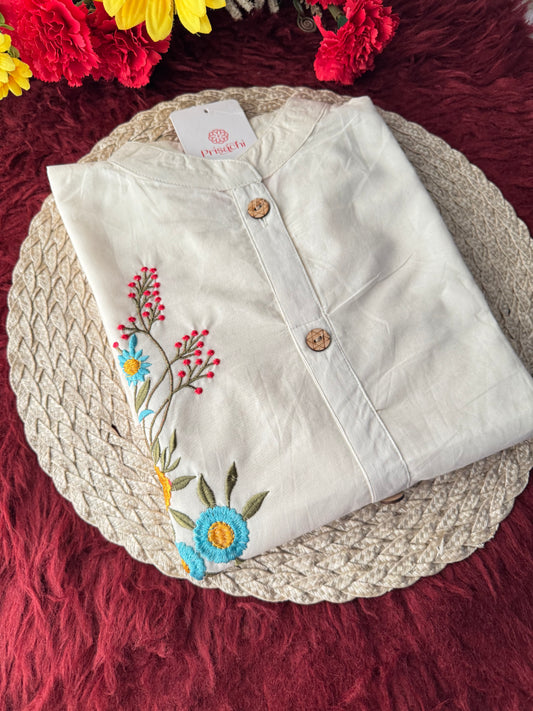
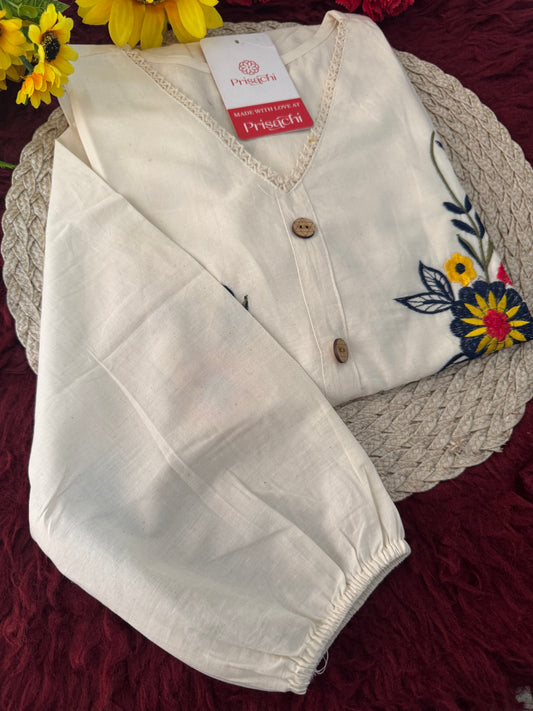
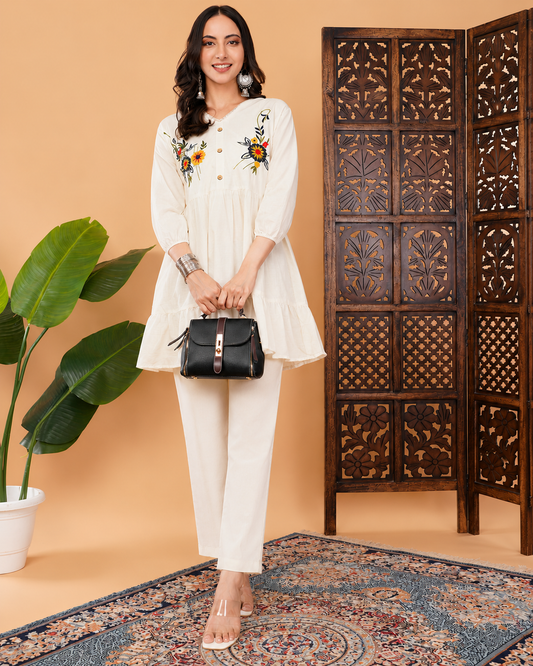
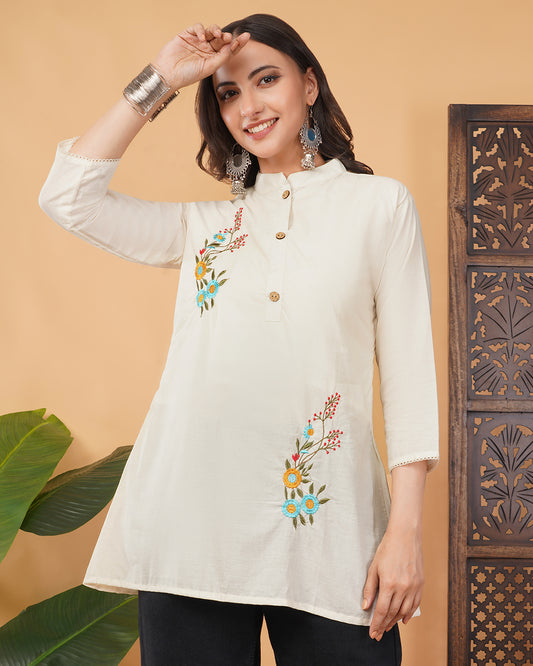
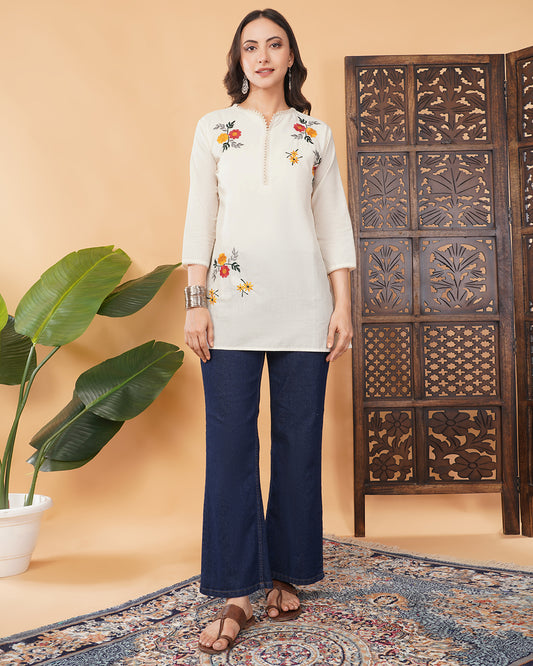
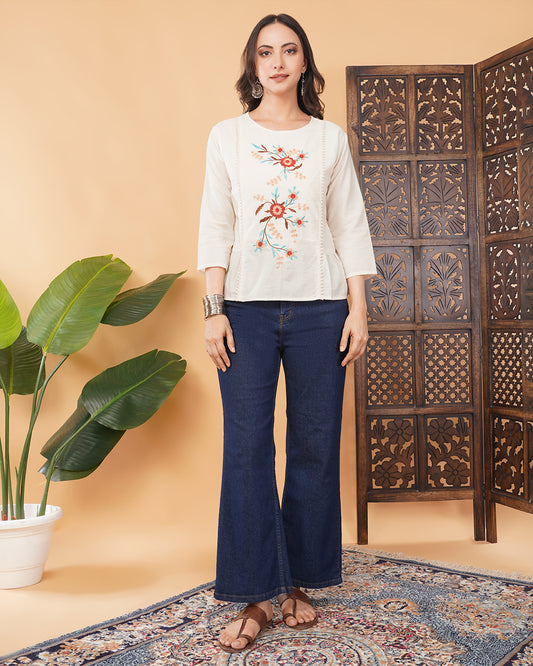
The collection covers cotton handlooms, soft silks, regional weaves, and designer pieces for receptions. For coordinated traditional looks, the chikankari kurta set range has pieces that work with white and pastel sarees in the same wardrobe.
Caring for Sarees
Cotton sarees — hand wash or gentle machine cycle with mild detergent. Wash darker colours separately the first few times. Iron on medium heat.
Silk sarees — dry clean only. Regional silks with zari work especially. Water destroys zari. Don’t save money here.
Georgette and chiffon — hand wash cold, don’t wring, hang to dry in shade.
For Banarasi and Kanchipuram silks, store wrapped in muslin cloth. Not plastic. Refold along different creases every few months to avoid permanent fold lines. Air them out occasionally.
Net and embroidered sarees — dry clean only, store hung on padded hangers rather than folded.
Add neem leaves or natural moth repellent for long-term silk storage. Silk attracts insects more than other fabrics.
FAQs on Sarees for Women
Which saree is best for beginners?
Mulmul, soft cotton, georgette, and chiffon. Light, easy to drape, doesn’t slip out of pleats. Heavy silks like Kanchipuram or Banarasi are harder to manage at first.
What’s the difference between Banarasi and Kanchipuram?
Banarasi comes from Varanasi with floral and Mughal-inspired zari motifs, slightly stiff drape. Kanchipuram comes from Tamil Nadu with thick zari borders, contrasting pallu, temple motifs. Kanchipuram is heavier. Banarasi is softer.
Which colour saree is best for weddings?
Red for North Indian brides. Red, maroon, or gold Kanchipuram for South Indian brides. For guests, jewel tones (emerald, wine, sapphire) for evening events, pastels for daytime.
How do I drape a saree as a first-timer?
Start with Nivi — front pleats into petticoat, pallu over left shoulder. Practice with lightweight fabric like georgette or mulmul. YouTube tutorials get most women comfortable in 15–20 minutes.
How do I care for silk sarees?
Dry clean only. Store wrapped in muslin cloth, not plastic. Refold along different creases every few months. Add natural moth repellent for long-term storage.