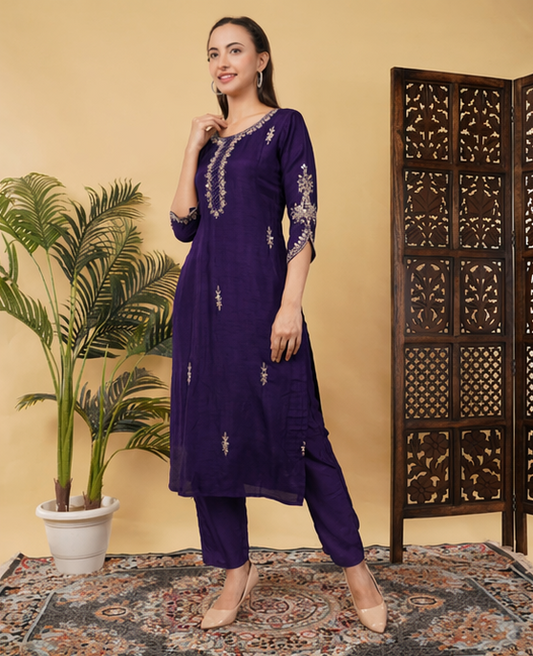
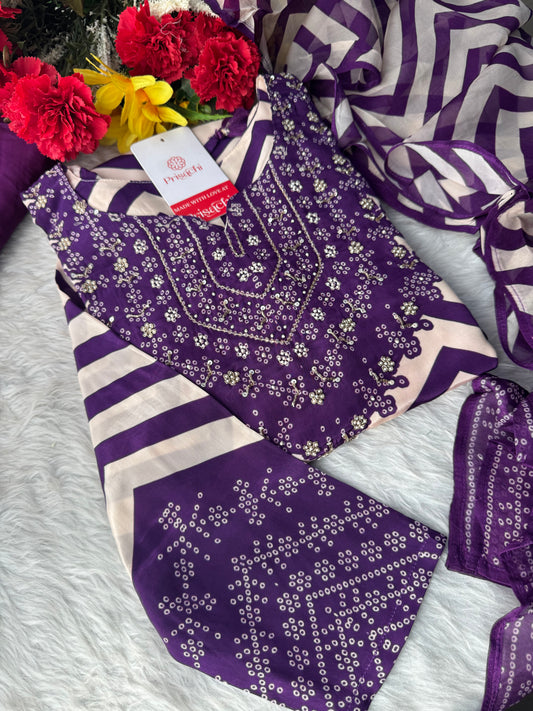
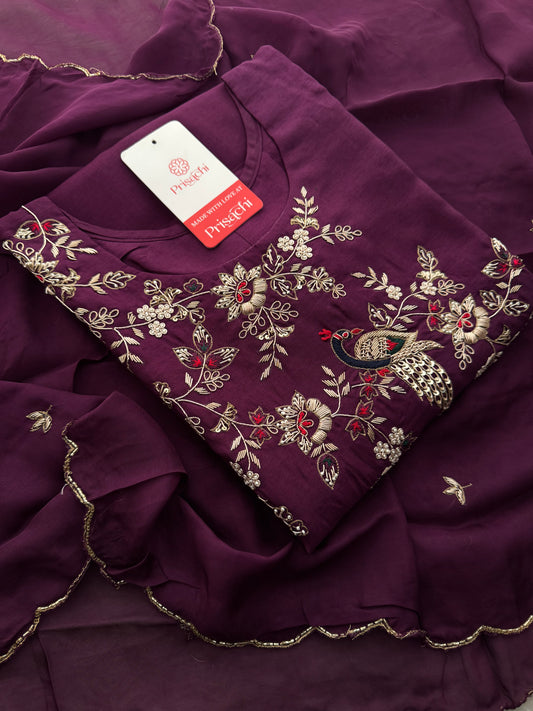
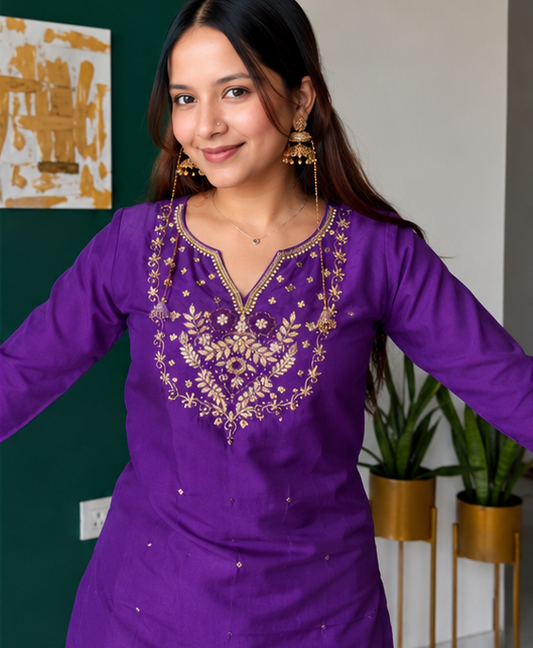
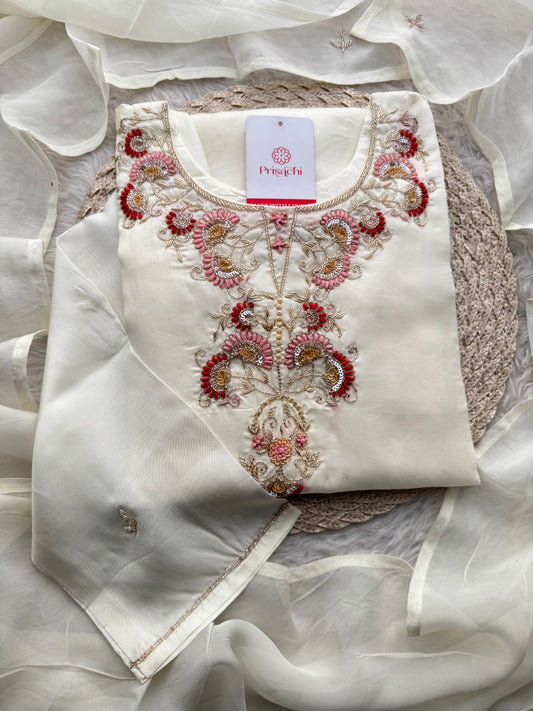
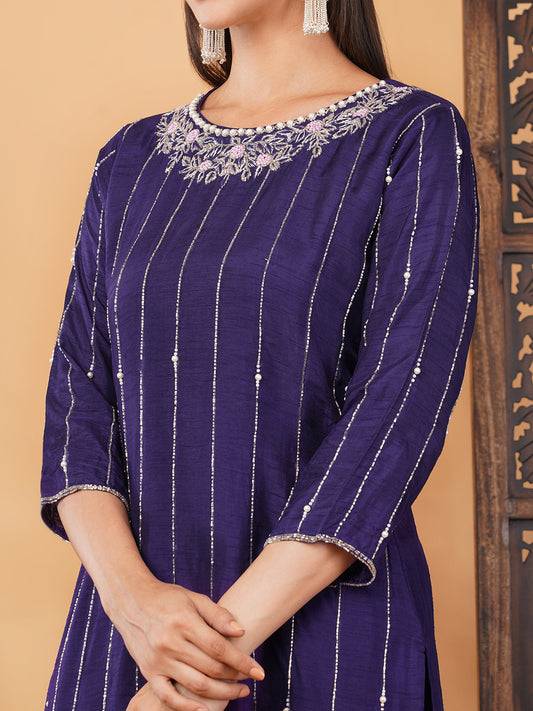
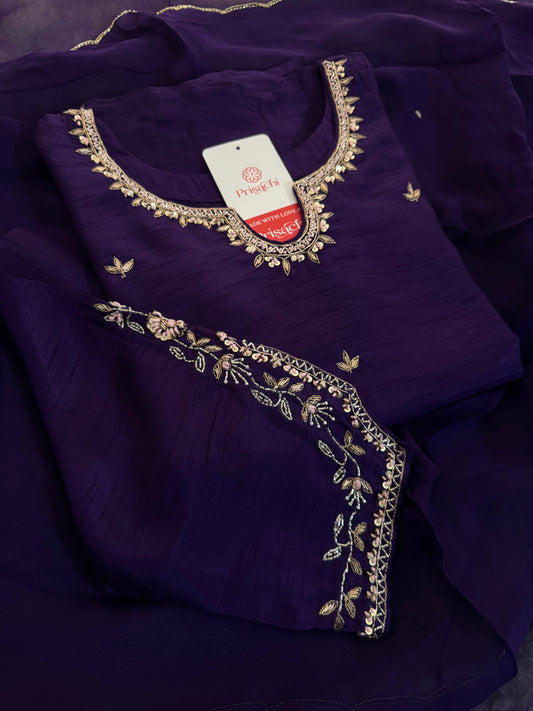
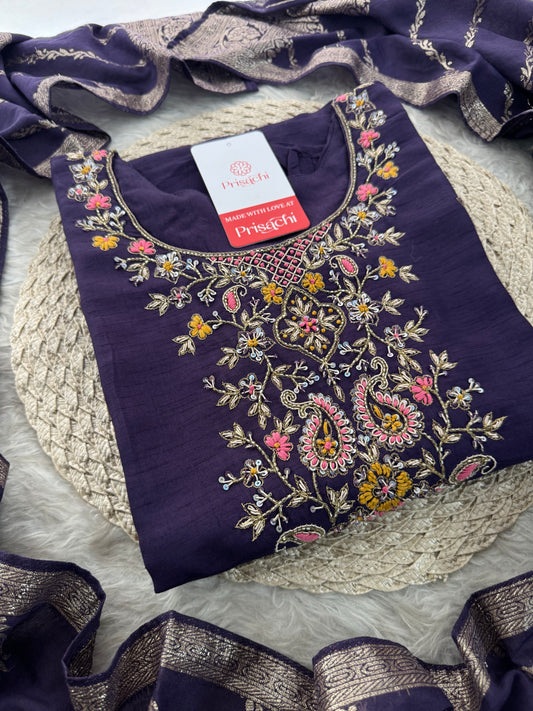
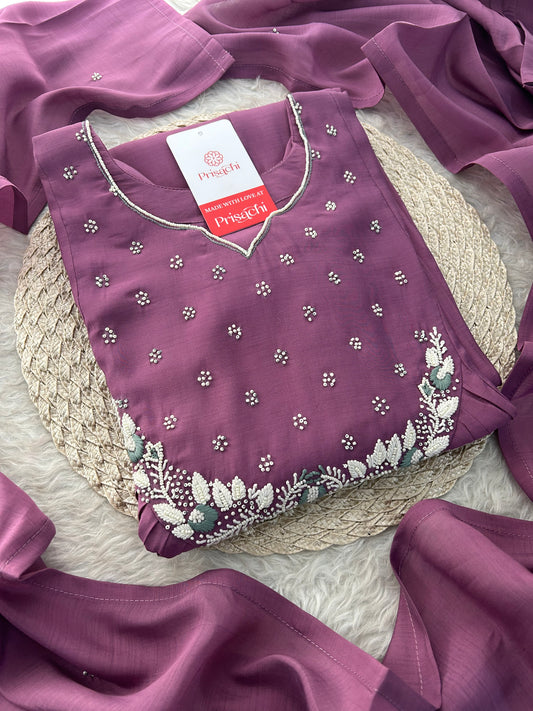
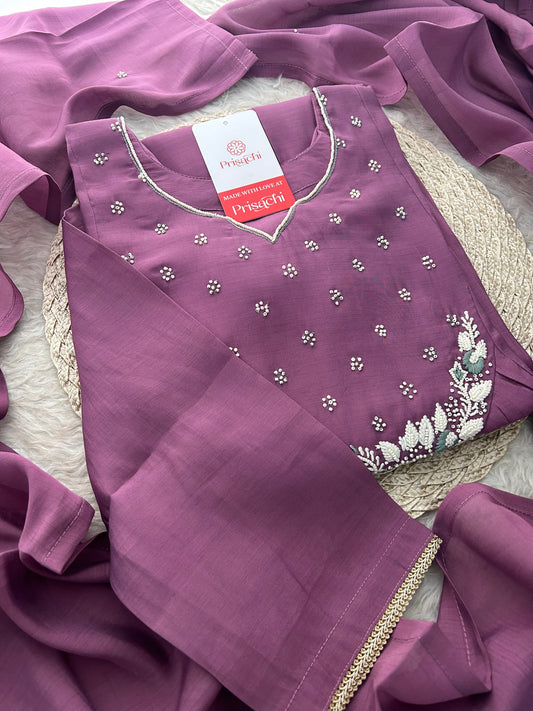
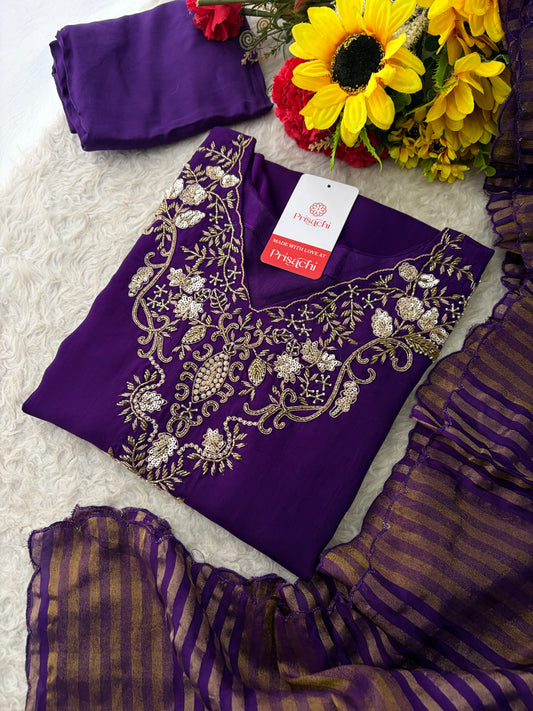
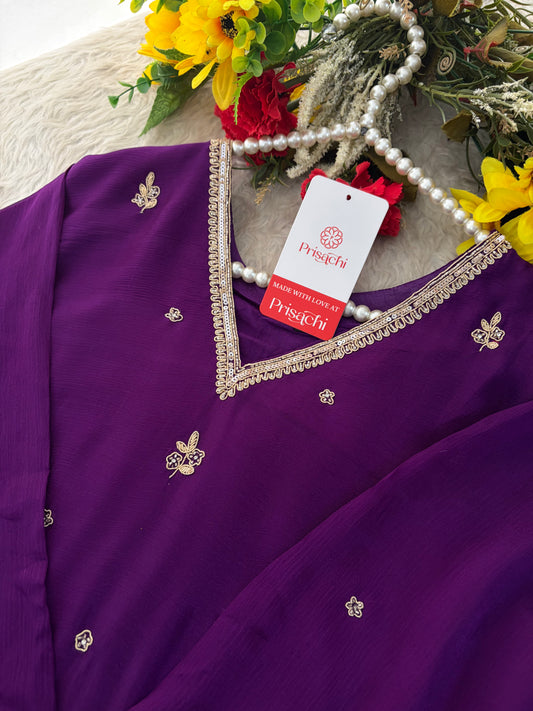
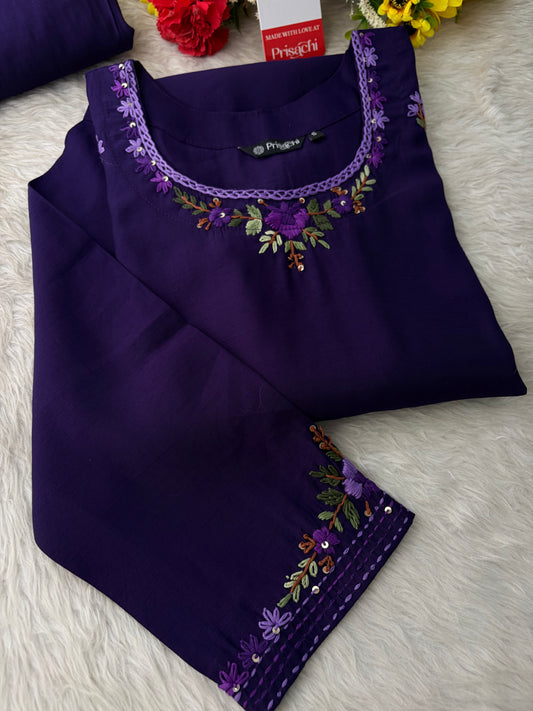
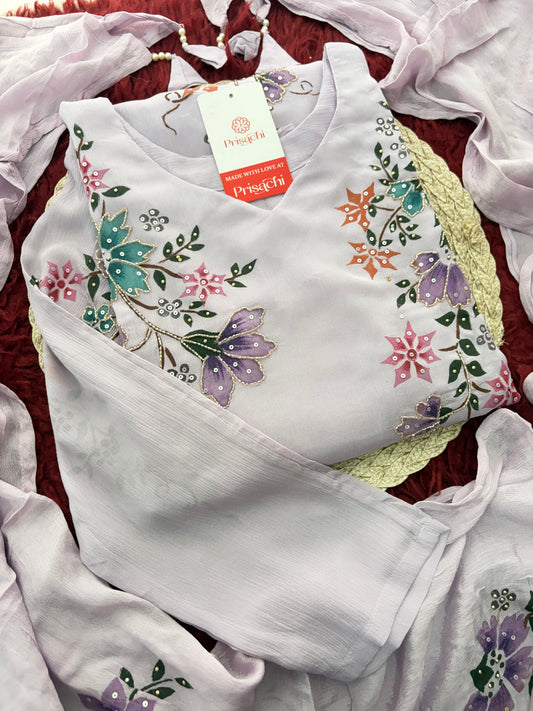
Purple Kurta Set for Women
Purple Quietly Became Everyone’s Favourite Festive Color
Five years ago purple wasn’t really on the list. Bridesmaid lehengas were red, pink, sometimes gold. Festive outfits leaned toward pink or maroon. Purple showed up occasionally in deep plum, mostly at older aunties’ functions.
Then lavender happened. One designer collection led to another. Bollywood weddings started featuring mauve. Stylists noticed how well purple photographs in indoor light, and how few people show up wearing it. Within a couple of years, lavender and dusty purples became the smart-money pick for festive dressing.
The shift is real. A purple kurta now reads contemporary in a way it didn’t before. Prisachi’s purple kurta set collection leans into both ends — modern dusty lavenders for the women who started this trend, and deeper plums and eggplants for the women who were wearing purple long before it was cool.
The Shades That Actually Matter
Eight or nine shades of purple show up in ethnic wear. Three of them carry most of the wardrobe weight.
Lavender is the pale, slightly grey-toned purple. The fashion-week shade. It photographs almost ivory in some lights, almost lilac in others, and pairs effortlessly with white or pale gold accents. If you’re shopping for a sangeet outfit and unsure what to wear, lavender will not steer you wrong.
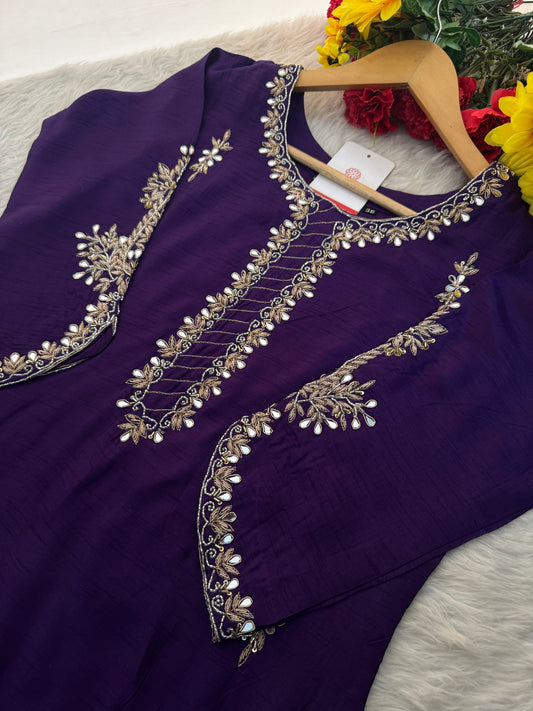
Plum is the rich, slightly red-toned purple at the deeper end. Sophisticated, grown-up, wedding-evening appropriate. The shade your mother would approve of and you would actually want to wear.
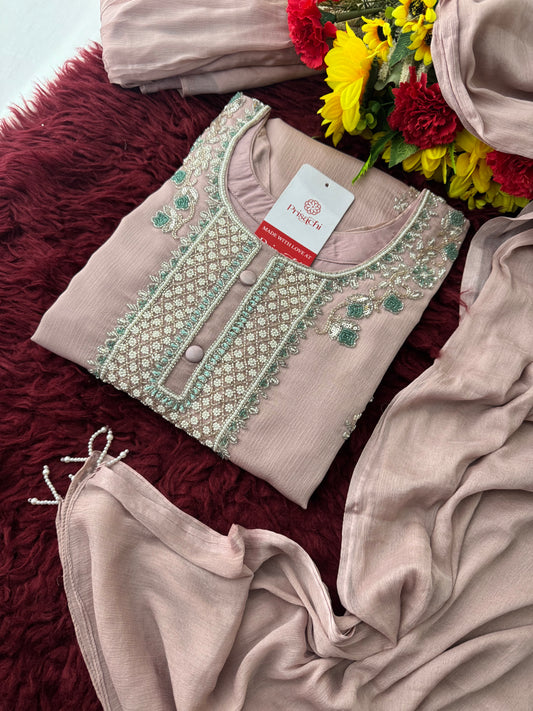
Mauve sits between the two — purple with brown or dusty grey undertones. Possibly the most universally flattering color in the entire ethnic wear spectrum, full stop. Works on every skin tone, photographs well, dresses up or down depending on what you put it with.
Beyond these, you’ve got lilac (brighter, more violet), wisteria (cooler, almost blue-leaning), eggplant (deep, almost-black), wine purple (warm and rich), and royal purple (saturated, festive). Each suits a slightly different mood and skin tone, but if you only buy three purples in your life, make them lavender, mauve, and plum.
Skin Tone and Purple
Purple has fewer skin-tone pitfalls than yellow or red. Most purples work on most people.
The general logic — warm undertones look better in plum, wine, and warmer mauves. Cool undertones look better in lavender, lilac, and bluer mauves. Deep skin tones glow in royal purple and eggplant. Plum and mauve work across nearly all skin tones, which is part of why they keep getting picked for wedding-guest pieces.
The one shade to be cautious about is bright lilac. It can wash out fair-and-cool skin in some lights and clash slightly with very warm undertones. Test it in daylight before committing.
Where Purple Kurtas Fit
Wedding guest is the obvious one. Lavender or mauve in Chanderi for daytime ceremonies. Plum or wine purple in georgette or silk for evening receptions and sangeets. Add metallic embroidery — gold on plum reads classic, silver on lavender reads modern — and you’ll get more compliments at the function than you’d expect.
Office works in the muted shades. Mauve, plum, and wisteria in clean cuts pair with the straight kurta for women approach for professional looks that don’t feel stiff. Save lavender for casual Fridays. Save royal purple for after-work events.
Casual and summer wear belongs to lavender and lilac, mostly. Cotton or mulmul, light prints, juttis. Easy.
For festive home wear and family functions, mid-tone plum and mauve handle the day comfortably without trying too hard.
The pieces that justify the most investment are the festive ones. The anarkali kurta set collection in plum or eggplant carries embroidery beautifully. A purple sharara in mauve or wine is one of the more elegant wedding-guest options available.
Worth noting — purple is one of the few colors that pairs equally well with gold and silver embroidery. Gold on deeper plum, silver on lavender, both work. Which means a purple kurta set fits with whatever jewellery you already own.
Cuts and Fabrics That Wear Purple Well
Fabric matters more for purple than for most colors because the depth of the color depends on it. Flat cotton can make a beautiful plum look slightly dusty. Silk and Chanderi pull the same color into something rich.
Cotton and mulmul work for lavender and lilac daily wear. Chanderi is the upgrade pick — the soft sheen makes mauve and plum look genuinely expensive. Georgette handles brighter and deeper purples without going flat. Silk purple is the dressy choice for sangeet and reception evenings. Velvet purple is winter wedding territory.
For finer threadwork, the chikankari kurta set range has lavender and mauve chikankari options. White chikankari on a soft purple base is unexpectedly beautiful and underused as a daytime ceremony outfit. For heavier work, the embroidered kurta set range has rich purple pieces for evening events.
Why Choose Prisachi for Purple Kurta Sets
Cheap purple dye doesn’t age well. What started as a clean lavender turns into greyish dusty white. Plum shifts toward muddy brown. The whole appeal of the color depends on the dye holding its depth, and most fast-fashion purples lose it within four or five washes.
Prisachi pays attention to dye quality on purple. Lavender stays clean and pale rather than greying. Plum holds its red-purple warmth. Eggplant keeps the near-black depth that makes the color sit so well in evening lighting. Fabrics chosen so the dye fixes properly without bleeding into the dupatta or pants in subsequent washes.
The collection covers the full range from light daytime lavenders to deep evening eggplants, and the mid-tones — mauve, plum, wine — that handle wedding-guest dressing across functions.
Caring for Purple Kurta Sets
Purple needs slightly more care than blue or black but less than red or yellow. The big risks are dye loss from sun exposure and grey-shifting from harsh detergents.
Wash separately for the first few washes — royal purple and lilac especially can bleed. Cold water, mild detergent, no bleach or strong softeners. Air dry in shade. The sun fades purple visibly within a few exposures, and lavender specifically can develop a yellow cast from sun damage. For silk purple or anything with sequin, zari, or zardozi work, dry clean only.
One specific thing for pastels — lavender, lilac, and pale mauve sit close to white in visual weight. Any greying shows immediately. Wash these alone or with other purples, in cold water, and avoid drying near darker clothes.
FAQs on Purple Kurta Sets for Women
Which shade of purple suits me best?
Plum and mauve work on almost everyone. Beyond that, warm skin tones do better with plum and wine purple, cool skin tones with lavender and lilac, deep skin tones with royal purple and eggplant. Mauve is the safest universal pick.
Is purple a good color for wedding-guest dressing?
One of the best, currently. Lavender or mauve for daytime ceremonies. Plum or wine purple for evening events. Add metallic embroidery for dressier occasions.
Can purple kurtas be worn for office?
Yes, in the muted shades. Mauve, plum, and wisteria in clean cuts read professional. Bright royal purple and eggplant lean too festive for most office settings.
How do I keep my purple kurta from fading?
Wash separately in cold water with mild detergent. Skip bleach, fabric softener, and direct sunlight. For silk and embroidered purples, dry clean only.